

Views: 0 Author: Site Editor Publish Time: 2026-11-09 Origin: Site


When comparing rigid boxes vs folding cartons for skincare products, start with the product, packing process, and sales channel. Folding cartons are often a practical choice for compact individual retail packs. Rigid boxes are worth considering when a set needs a structured presentation or a particular opening experience.
Neither format automatically provides adequate shipping protection or a stronger brand image. The result depends on the complete design, including dimensions, materials, inserts, printing, and outer shipping packaging.
This guide explains the differences and the checks beauty brands should make before selecting a format.
Table of Contents
Folding cartons are generally made from paperboard that is printed, cut, creased, and folded into shape. Depending on the design, they may include glued seams, tuck closures, or other locking features.
They are commonly delivered flat and erected before filling. Their suitability for manual or automated packing depends on the carton structure and equipment.
Yison’s custom folding carton boxes offer a starting point for discussing sizes, materials, and printed finishes for skincare products.
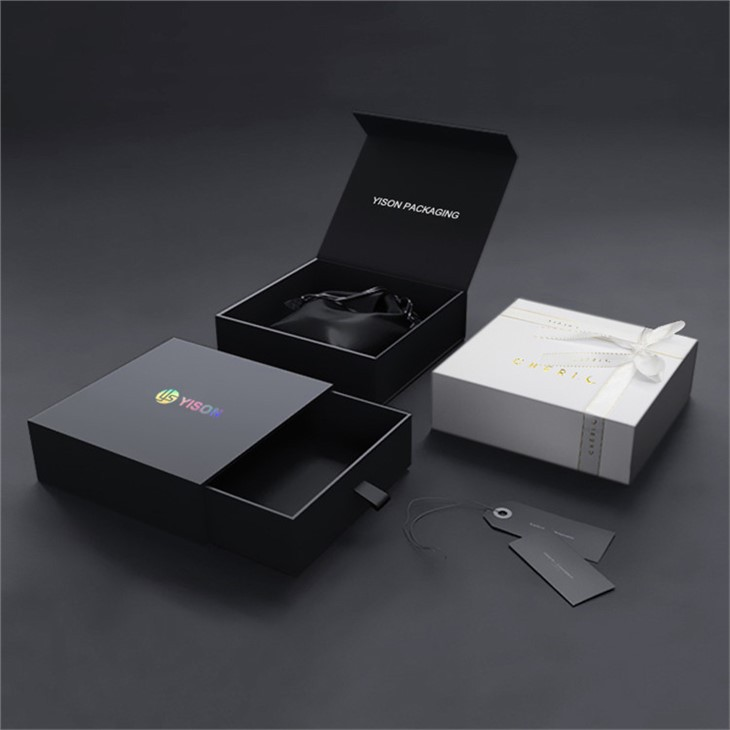
Rigid boxes typically use a structural board covered with printed or decorative wrapping paper. Formats include lid-and-base boxes, book-style boxes, and drawer constructions.
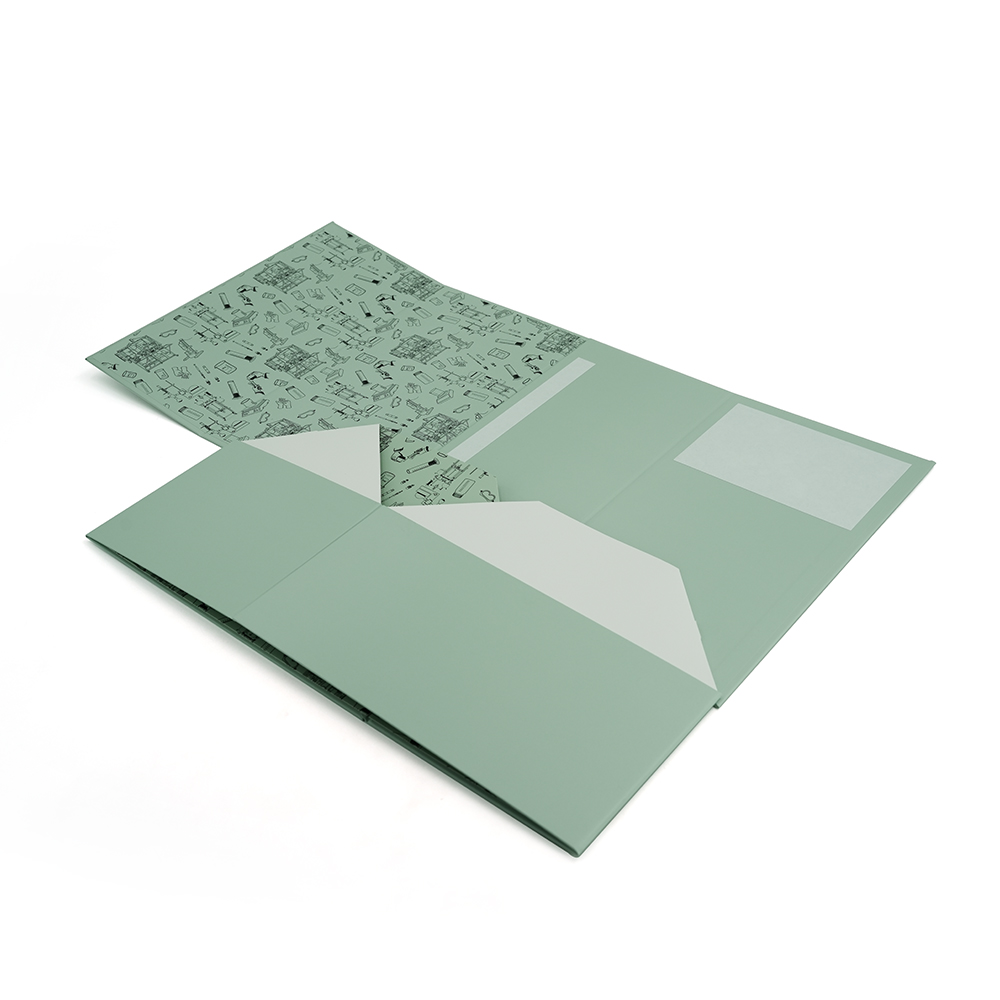
Traditional set-up rigid boxes retain their assembled shape. However, some rigid designs are collapsible and can be delivered flat.
A collapsible rigid box is not the same construction as a conventional folding carton. Ask for a structural drawing or sample rather than relying on the term “folding box.”
Factor | Folding cartons | Rigid boxes |
|---|---|---|
Construction | Creased paperboard folded into shape | Structural board, commonly covered with wrapping paper |
Delivery format | Commonly supplied flat | Assembled or collapsible, depending on construction |
Presentation | Compact retail packs with broad printing options | Structured formats with varied opening styles |
Inserts | Can include fitted supports or partitions | Can include fitted trays, supports, or compartments |
Packing process | Requires erection and closure; equipment compatibility varies | May require lid handling, insert fitting, or collapsible-box assembly |
Cost drivers | Board, size, printing, closures, inserts, and quantity | Board, wrapping, assembly, closures, inserts, and quantity |
Protection | Must be evaluated with the product and shipping pack | Must also be evaluated with the product and shipping pack |
Disposal considerations | Depend on materials and added components | Depend on materials, wrapping, closures, and added components |
Use this comparison to shortlist options. Confirm performance through a loaded sample and an agreed validation process.
A folding carton can be suitable for an individual cleanser, serum, moisturizer, or sunscreen product when it provides the required fit, information space, and handling performance.
The container’s filled weight, shape, and closure matter more than the product category alone.
For a glass jar or dropper bottle, assess whether the design needs a supporting insert, reinforced features, or additional transport protection. Glass does not automatically require a rigid box.
Rigid boxes are worth evaluating when several products need a defined arrangement, coordinated opening sequence, or substantial presentation structure.
For example, Yison’s rigid face cream gift boxes illustrate packaging options for skincare presentation and gift applications.
Folding cartons can also accommodate sets. The choice depends on the combined weight, insert design, display requirements, and packing workflow.
Consider the likely order quantity, launch date, artwork changes, and remaining inventory.
A seasonal sleeve or revised print design may allow an existing structure to be reused. Confirm the practical saving with the supplier, since artwork, inserts, and production setups can still differ.
Rigid construction can provide stiffness, but stiffness alone does not establish protection against drops, vibration, or product movement.
For both formats, check:
Support beneath the filled container.
Separation between products.
Clearance around pumps, droppers, and caps.
Movement inside the box.
Closure retention during handling.
Surface rubbing against labels or decorative finishes.
Compatibility with the outer shipping package.
An insert should hold the product without placing unsuitable pressure on a vulnerable closure or making removal difficult.
A retail carton or rigid presentation box may still need a shipping carton and cushioning for parcel delivery. Evaluate the complete pack for the intended route rather than treating either format as a ready-made shipping solution.
Both formats can support carefully designed graphics and decorative finishes.
Depending on the selected material and production method, options may include full-color printing, foil stamping, embossing, debossing, coatings, or lamination.
The decision is broader than “simple carton” versus “luxury rigid box.”
A folding carton can support a refined skincare identity through typography, color, proportions, and selective finishing. A rigid box can provide a particular opening experience, but additional components should serve a clear purpose.
Check physical samples for:
Color appearance on the chosen material.
Small-text readability.
Alignment of print and decorative processes.
Crease appearance or wrapping quality.
Surface marking during normal handling.
Consistency across related products.
Avoid assuming that a more elaborate box will increase sales or justify a higher retail price. Assess presentation against your brand brief and customer expectations.
Flat-delivered folding cartons can reduce empty-packaging storage volume compared with assembled boxes of similar dimensions.
Collapsible rigid boxes may also reduce empty shipping and storage volume. Yison offers a flat-pack collapsible rigid magnetic box, which can be evaluated where both rigid presentation and flat delivery are priorities.
Request packed carton dimensions, quantities, and gross weights for the actual proposals.
Include the work required to erect the box, fit the insert, load products, add printed materials, and close the pack.
A flat-packed design can save space while adding destination assembly work. An assembled rigid box can simplify some steps but introduce others, such as handling separate lids.
Run a packing trial with the team or fulfillment partner that will perform the work.
Empty-box freight and finished-product freight are different comparisons.
Once filled, dimensions, weight, outer cartons, and protective materials determine the shipping requirement. Do not assume that savings from flat delivery will apply equally to finished consumer orders.
A folding carton will often have a lower manufacturing cost than a similarly sized rigid box with comparable decoration. However, actual quotations depend on the specification and order quantity.
Ask suppliers to identify:
Cost item | What to compare |
|---|---|
Box production | Dimensions, materials, printing, finishes, and closures |
Inserts | Material, construction, and fitting work |
Development | Samples, tooling, and setup charges |
Delivery | Packing dimensions, freight scope, and destination |
Fulfillment | Assembly, loading, and closing work |
Inventory | Storage needs and risk of unused packaging |
Compare each option around the same product, quantity, destination, and presentation requirements.
MOQ and lead time should be confirmed for the exact design. They cannot be reliably determined from the words “rigid box” or “folding carton” alone.
Neither format should be described as environmentally preferable without reviewing its actual construction.
Consider material quantity, coatings, laminates, adhesives, windows, magnets, and inserts. Ask which components can be separated and what disposal guidance is appropriate for the target market.
A reusable appearance does not prove that customers will reuse a box. Likewise, a paper-based structure does not establish that every local collection system will accept it.
Specify any recycled-content or sourcing requirements in the purchasing brief and request supporting documentation for the proposed materials.
Use a folding carton as a starting point when compact individual packaging, flat storage, and an efficient packing process are priorities.
Evaluate a rigid box when the opening structure, product arrangement, or gift presentation is central to the packaging brief.
Before approving either option:
Confirm final container dimensions and filled weights.
Review the box and insert drawings.
Check a loaded physical sample.
Run a packing and removal trial.
Validate the complete shipping pack for its intended route.
Approve materials, artwork, and acceptance criteria.
A skincare range can use different formats for different purposes while maintaining consistent colors, typography, and branding.
No. Protection depends on container support, product separation, inserts, and the complete shipping package. A suitably designed folding carton may be appropriate, but the proposed pack should be validated.
Yes. Material selection, proportions, print quality, and finishing can support a premium presentation. Review samples against your brand requirements rather than judging by format alone.
No. Traditional set-up rigid boxes retain their shape, while collapsible rigid designs can be delivered flat. Confirm the supplied format and assembly method.
Compatibility depends on the carton or box structure and the packing equipment. Share drawings and samples with your equipment or fulfillment team before committing to production.
Not necessarily. Individual products and gift sets may have different requirements. Keep the visual identity consistent while selecting structures around each product and distribution channel.
Choosing between a folding carton and a rigid box?
Contact Guangzhou Yison Printing Co., Ltd. with your product dimensions, filled weight, quantity, sales channel, and preferred presentation. Request suitable structural options and an itemized quotation, then confirm fit and handling through samples before bulk production.


