

Views: 0 Author: Site Editor Publish Time: 2026-11-16 Origin: Site


Face cream packaging boxes should be designed around the finished jar, not its nominal capacity alone. The jar body, lid, filled weight, insert, and intended distribution route all influence the final box specification.
A well-fitted pack should locate the jar, avoid unsuitable pressure on the closure, and allow comfortable removal. For online orders, the retail or gift box must also work with the complete shipping package.
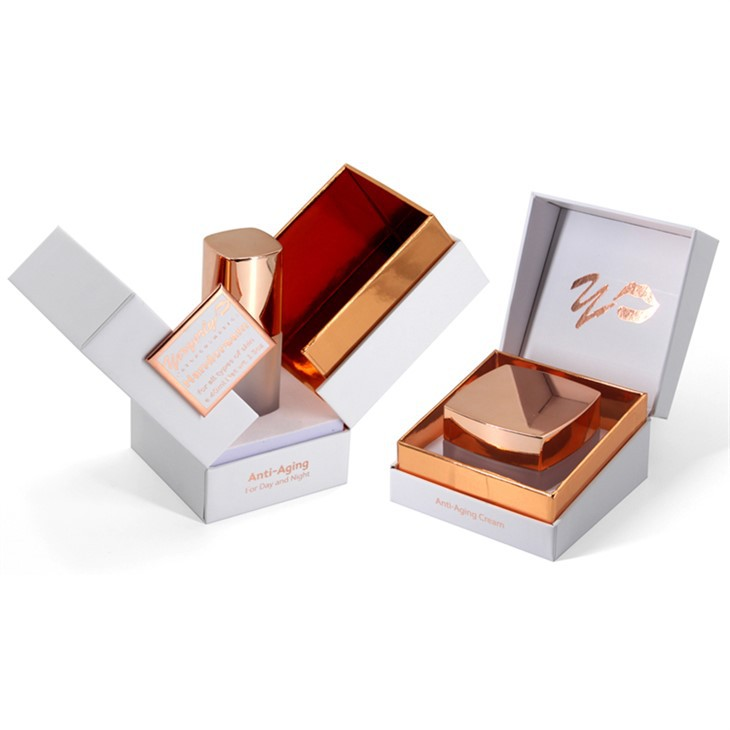
This guide explains how to measure cosmetic jars, develop the box and insert together, and check samples before bulk production.
Table of Contents
A capacity such as 30 ml or 50 ml does not establish the external dimensions of a jar. Containers with the same capacity can have different wall thicknesses, shapes, bases, and lids.
Measure the final container with its closure fitted in the condition intended for sale.
Measurement | What to record | Why it matters |
|---|---|---|
Overall height | Base to the highest point of the fitted closure | Establishes the product envelope and helps determine lid clearance |
Maximum outside dimensions | Largest diameter, or length and width for a non-round jar | Identifies the widest part that must fit inside the packaging |
Jar body dimensions | Dimensions at the proposed insert contact points | Helps define cavity shape and support |
Lid dimensions | Diameter or width, height, and projecting details | Prevents overlooking an oversized or decorative closure |
Filled weight | Jar, formula, closure, and supplied accessories | Informs structural and handling evaluation |
Accessories | Spatula, leaflet, pouch, or other included item | Identifies additional space and retention needs |
Measure several representative samples where possible. Ask the container supplier for drawings and dimensional tolerances so the packaging is not based on a single jar.
If the lid or jar changes during development, review the packaging fit again.
Always state whether a quoted box size is internal or external.
Internal dimensions describe the space available inside the box. External dimensions are relevant to shelf space, shipping cartons, and storage.
They are not interchangeable. Board construction, wrapping, folds, and inserts can reduce the usable space.
For an upright jar, the internal layout needs to accommodate:
The jar’s maximum external profile.
Insert walls, supports, or cushioning.
Suitable loading and removal clearance.
Any printed materials or accessories.
Space above the closure.
The exact allowances depend on the structure and materials. There is no universal gap suitable for every cosmetic jar.
Ask the supplier to show the jar, insert, and box together in a dimensioned drawing. Confirm which measurements are nominal and how production variation will be handled.
A raised insert can improve presentation while reducing the space above the jar.
Check the loaded sample with the lid fully closed. It should close without forcing the jar downward, deforming the insert, or visibly bowing the box.
For drawer designs, also check that the loaded tray slides without the jar or lid rubbing against the sleeve.
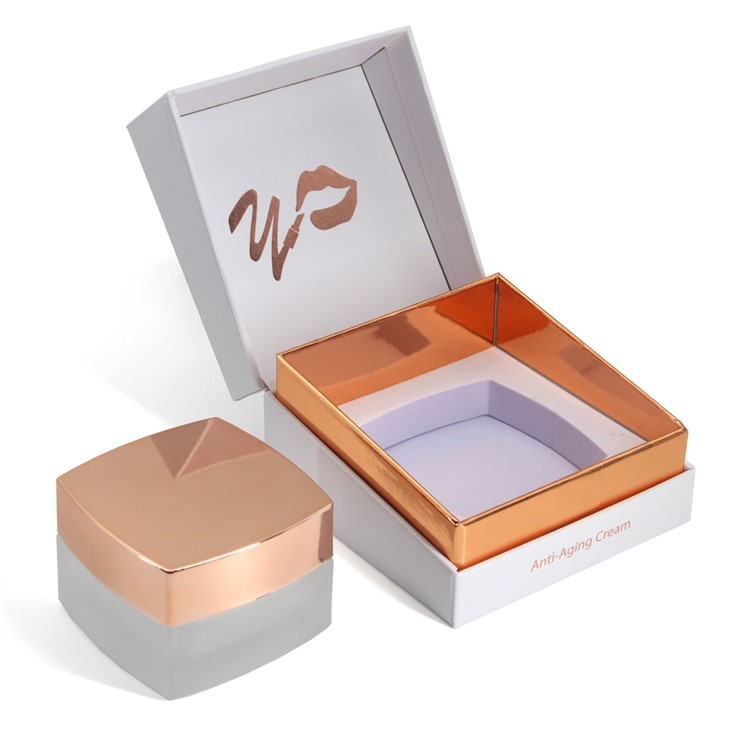
An insert should do more than make the jar look centered.
Its design needs to account for the jar’s weight, contact surfaces, movement, and removal method.
Review where the jar is supported and where handling loads will be transferred.
Avoid relying on a decorative lid or projecting feature to carry the main load unless that arrangement has been specifically evaluated. Check that the base support remains stable when the pack is lifted or tilted.
Yison’s custom face cream packaging boxes include customizable dimensions and insert options that can be discussed around a specific jar.
A jar can appear closely fitted while still lifting out of its cavity when the box is turned.
Evaluate sideways movement, vertical movement, and rotation. If the jar has a front-facing label, check whether it remains in the intended display position.
A tighter fit is not always better. Excessive grip can make loading difficult, mark the jar, or cause the customer to pull on the lid.
Consider finger access, an opening in the insert, or another suitable lifting feature.
During the sample trial, check whether a user can remove the jar without excessive force and without unintentionally loosening the closure.
Material selection should follow the complete design rather than a simple rule based on jar weight.
Component | Options to evaluate | Main checks |
|---|---|---|
Folding carton | Suitable paperboard grades and closure designs | Loaded shape, bottom support, folds, and packing compatibility |
Rigid presentation box | Structural board with wrapping paper | Corners, base support, lid fit, and surface quality |
Paper-based insert | Folded paperboard, corrugated structures, or molded pulp | Cavity fit, support, assembly, and product contact |
Foam insert | Appropriate foam material and cavity design | Compression, fit, surface interaction, and removal |
Shipping package | Suitable outer carton and protective components | Performance of the complete loaded pack |
Paper pulp and molded pulp should not be treated as two universal protection grades. Ask about the actual construction and properties being proposed.
Likewise, a fabric lining may provide a decorative contact surface without providing the structural support or cushioning the jar requires.
For a rigid presentation option, review Yison’s face cream gift boxes and confirm the material and insert specification for your project.
The cosmetic jar and its closure contain the formula. The outer box and insert organize and support the container.
A magnetic flap, ribbon, or tuck closure does not establish a leakproof or contamination-resistant seal for the cream.
Before validating the outer packaging, confirm that the jar and closure are suitable for the product and intended handling conditions. Any liner, sealing component, or tamper-evident feature should be assessed separately.
If leakage occurs during testing, investigate the container and closure as well as the forces introduced by the packaging.
A box that looks suitable on a shelf may need additional protection for individual parcel shipping.
Tell the supplier how the product will travel:
Bulk delivery to a retailer.
Packing into a larger skincare gift set.
Individual e-commerce orders.
Delivery through a distributor or fulfillment partner.
For parcel delivery, evaluate the jar, insert, presentation box, outer carton, and cushioning as one system.
Check for glass contact with hard surfaces, movement between components, closure opening, and damage to the visible packaging.
Fragile labels can communicate handling information, but they do not replace protective design and validation.
Right-size the shipping pack after the jar and retail packaging are established. Compare actual packed dimensions and weight rather than assuming a smaller retail box will always produce a lower freight charge.
Use final filled jars or agreed representative samples with equivalent dimensions and weight.
Before approval, confirm that:
The jar loads without excessive force.
The insert remains correctly positioned.
The base support carries the jar as intended.
The box closes without unwanted pressure on the lid.
The jar can be removed comfortably.
Labels and decorative surfaces are not visibly rubbed or scratched.
Accessories remain in their assigned positions.
The packing team can repeat the process consistently.
If several jar sizes share a box, check every version. A common outer box may need different inserts.
Agree on a test plan appropriate to the product and distribution route with your packaging team, supplier, or test provider.
Evaluate the complete shipping pack under the relevant handling conditions. After testing, inspect for breakage, leakage, insert collapse, closure movement, and changes in appearance.
Record the approved construction, materials, drawings, artwork, packing method, and acceptance criteria. Review affected checks if any of these change.
Send the supplier:
Final jar dimensions and container drawings.
Lid dimensions and closure details.
Filled weight and jar material.
Physical samples, if available.
Number of jars and accessories per box.
Preferred box style and product orientation.
Insert preferences.
Printing and finishing requirements.
Order quantity for each version.
Packing process and distribution route.
Delivery destination and required arrival date.
You can also review Yison’s cosmetic packaging range when preparing reference styles.
No. Capacity does not establish outside dimensions. Provide the finished jar’s overall height, maximum diameter or width, lid dimensions, and filled weight.
There is no fixed allowance for every design. Clearance depends on container tolerances, insert material, loading method, and removal requirements. Confirm it through drawings and physical samples.
Not necessarily. Some structures use integrated supports, while others need a separate insert. Evaluate how the complete design controls movement and supports the jar.
Do not assume so. The insert, outer shipping carton, cushioning, and distribution route all matter. Validate the complete loaded package.
It may be practical with different inserts or a validated adjustable design. Check fit, support, presentation, and removal for every jar size before approval.
Developing packaging for a new face cream or updating an existing jar box?
Contact Guangzhou Yison Printing Co., Ltd. with your jar and lid dimensions, filled weight, quantity, and distribution requirements. Discuss suitable box and insert options, then confirm the proposed fit through samples before bulk production.


